
Why Sign Spinning is one of the most sustainable forms of event marketing
Festivals, events and brand activations generate enormous amounts of temporary waste.
Single-use banners are produced for a weekend before being discarded. Thousands of flyers are handed out only to end up dropped on pavements or pushed into overflowing bins. Temporary signage is printed, transported, installed and removed, often with a lifespan measured in hours rather than months.
At the same time, organisers are under increasing pressure to think more carefully about the environmental impact of how events are promoted, funded and delivered.
This is where sign spinning offers something surprisingly valuable.
Rather than relying on large quantities of disposable print media, sign spinning creates attention through movement and human interaction. A single trained performer with a reusable branded sign can generate audience engagement across an entire day without producing the levels of waste associated with traditional street marketing campaigns.
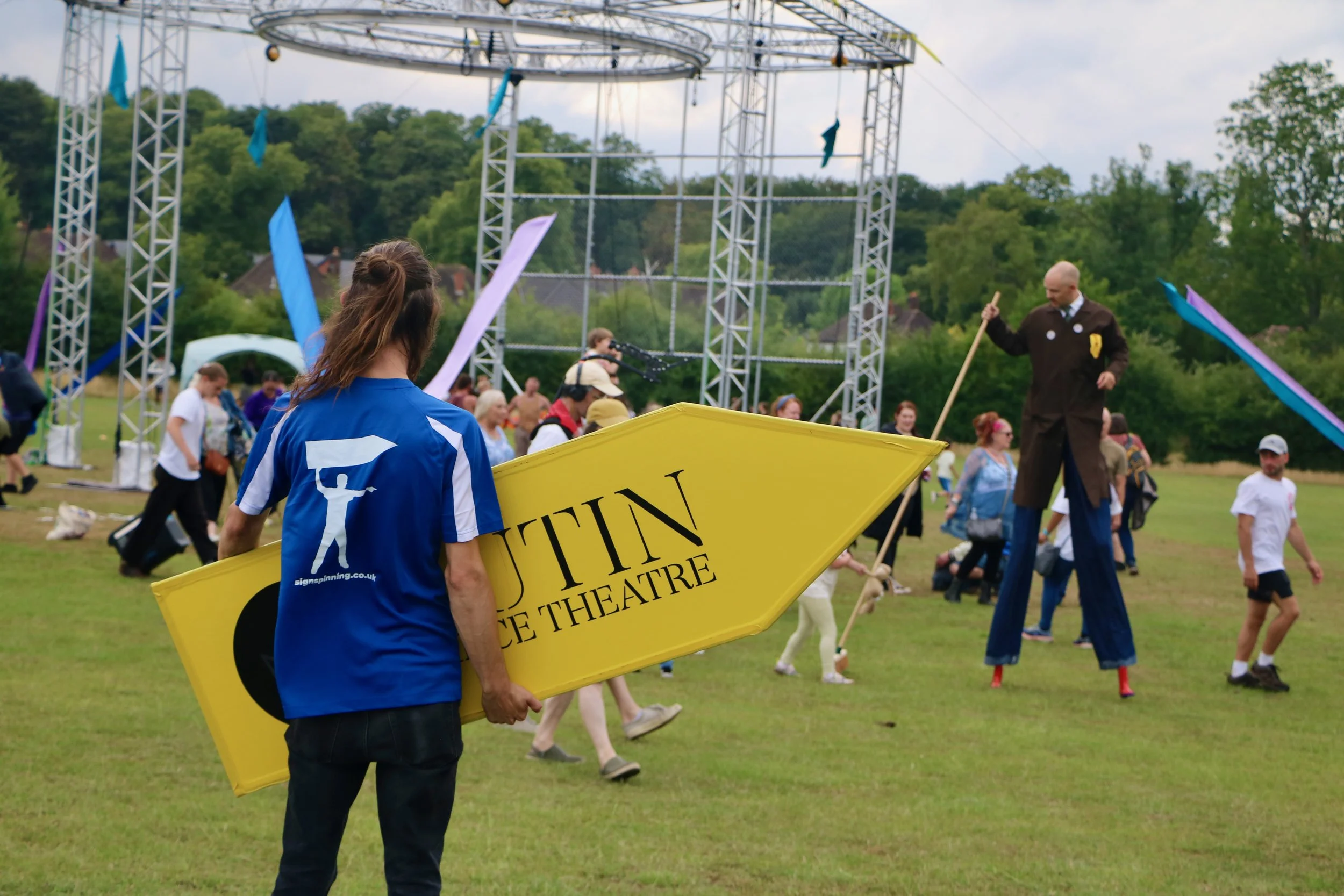
Our approach at Sign Spinning UK has been built around this principle from the beginning. We prioritise public transport wherever possible, produce signs in-house, reuse boards across campaigns and recycle materials responsibly at end of life. Compared to leaflet distribution, there is no trail of discarded paper left across the surrounding streets once the campaign ends.
The environmental case becomes even stronger when effectiveness is considered alongside sustainability.
Research shows that 71% of people remember a Sign Spinner’s message, compared to around 10% for comparable static media. That means campaigns can operate with significantly less physical infrastructure while still achieving higher levels of audience recall and engagement.
For festivals and events, this creates a meaningful shift in how visibility can be approached. Instead of relying on increasing volumes of temporary signage, organisers can focus on fewer, more memorable touchpoints that audiences actively engage with and remember long after the event has finished.
Sign spinning also fits naturally into the growing move towards more flexible, lower-impact event infrastructure. Performers can be positioned dynamically around a site depending on crowd flow, programming or venue demand, reducing the need for large quantities of fixed directional signage across multiple locations.
The result is a form of marketing that feels lighter operationally, more memorable experientially, and more aligned with the sustainability commitments many festivals and cultural organisations are now actively working towards.
As audiences become increasingly conscious of environmental impact, the methods events use to communicate and guide people become part of the wider experience itself. Sign spinning offers a way to create visibility and atmosphere without contributing to the same levels of short-life print waste that have become standard across the industry.
In practical terms, it means fewer discarded materials, lower waste output, reusable campaign infrastructure and stronger audience recall, all delivered through movement, interaction and live performance in the spaces where people are already gathering.
